Since the advent of the internet, the world has been moving faster and faster. Artificial intelligence, while further accelerating this movement, has introduced additional variables. In this context, professional photographers must evolve in a highly organised manner so as not to lose their way. This evolution must include developing empathy and the ability to integrate creatively into the client's teams. What is expected of creatives is to contribute their expertise while helping the existing team to evolve. The aim is to ensure that the client remains at the forefront of their field, while respecting the values and specificities of the domain in which the client operates. It is a balancing act that requires constant training. If the talent does well, the return is substantial. What could be more rewarding than working long-term with a client who has complete confidence in you?
Case Studies
How can a professional photographer develop his work to remain at the top of the game?
Below are a few examples.
As a Professionnal Photographer and Art Director based in Geneva, I provide coverage for projects all of Switzerland. For information and bookings, please send a mail to info@mysimeon.ch or send a WhatsApp message on following number +41 79 672 49 28.
Case Study: Chiaroscuro as Visual Strategy
CONTEXT
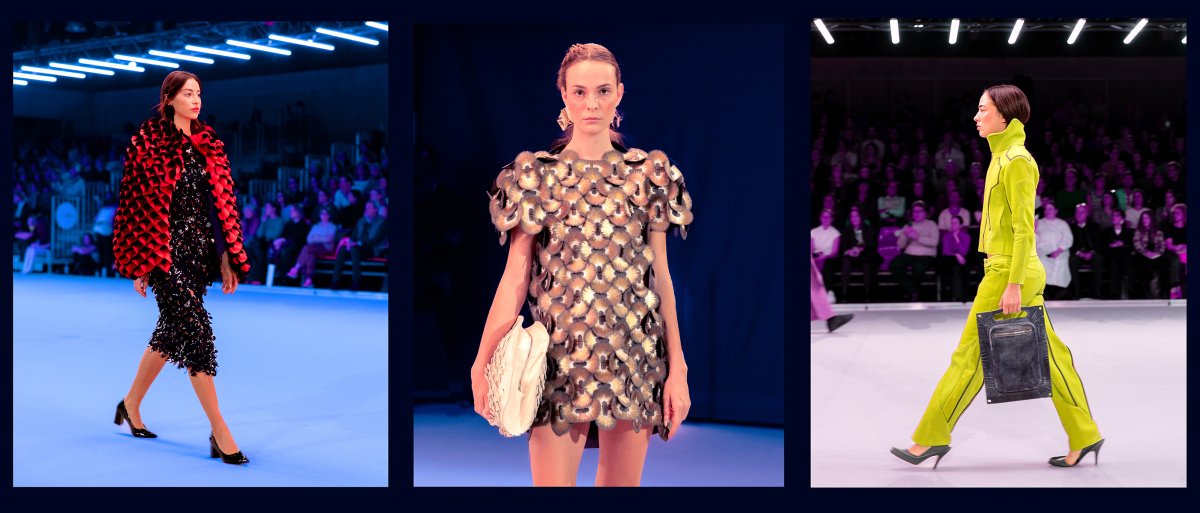
In watchmaking and jewelry photography, light is rarely treated as a narrative tool. It is treated as a technical requirement. The result is a visual landscape dominated by cold, neutral setups designed to document rather than interpret. For maisons whose entire value proposition rests on singularity, this approach represents a fundamental contradiction: the most distinctive objects in the world, photographed in the most interchangeable way possible.
This Case Study documents an ongoing research process into the application of Chiaroscuro as a strategic photographic framework, developed across multiple mandates with Swiss and Italian maisons including Bulgari and Ulysse Nardin.
CONCEPT & RESEARCH
The inspiration is rooted in the classical tradition of European painting. Caravaggio established the foundational principle: darkness is not absence, it is structure. It gives form its weight and light its meaning. Rembrandt extended this into the realm of warmth and intimacy, using directional golden light to sculpt volumes from obscurity rather than illuminate them uniformly.
The research question was straightforward: how does this principle translate into contemporary watchmaking photography, across boutique architecture, portrait, and press contexts? And more specifically, what is lost when it is ignored?
The answer, observed consistently across years of mandates, is tension. Without shadow, there is no contrast. Without contrast, there is no hierarchy. Without hierarchy, the eye has nowhere to go. An exceptional object, rendered in flat, shadowless light, becomes interchangeable with any other.
DEVELOPMENT & METHODOLOGY
The methodology developed across these mandates rests on a single discipline: reading existing light before creating new light. Rather than imposing a studio setup onto a location, the approach begins with an analysis of what the space already does photographically. Where does light concentrate? Where does shadow create depth? What does the architecture reveal at night that it conceals during the day?
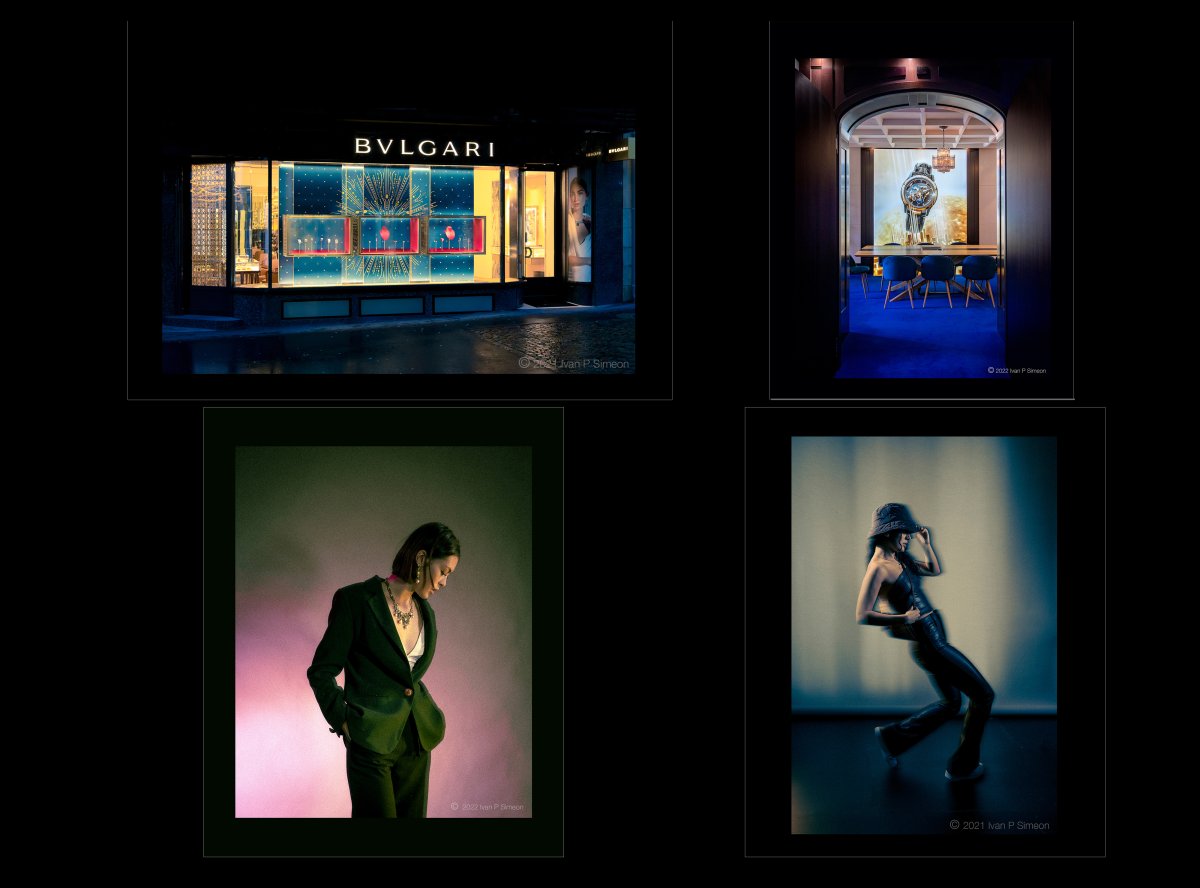
A significant part of this research was conducted in controlled studio conditions. Working systematically with models, stylists, jewelry designers, and assistants, the studio developed a rigorous practice of constructing Chiaroscuro atmospheres from scratch, starting from a neutral white background and building darkness through precise, deliberate light placement. This foundational work, demanding in both time and collaboration, was never an end in itself. It was a laboratory: a space to understand exactly how shadow behaves, how it interacts with skin, fabric, and metal, and how far it can be pushed before it ceases to serve the subject. The conclusions drawn from this studio practice directly informed the approach taken in client mandates.
In the field, this means working at unconventional hours, adapting to conditions rather than controlling them, and making precise, minimal interventions to amplify what already exists. For the Bulgari boutique in Lucerne, photographed at night, a single intervention was made: the pavement in front of the window was wet down to intensify the reflections of the interior light onto the cobblestones. No artificial lighting was added. The image was already there. It required only the conditions to reveal it.
For portrait work, the same logic applies. Shadow is not cleaned away in post-production. It is used to define the subject, direct attention, and create the sense that something exists beyond the frame.
For architectural press photography at watch salons, the approach moves beyond pure documentation toward a cinematic reading of the space: understanding how a maison has staged its identity in three dimensions, and translating that into a two-dimensional image that carries the same intentionality.
RESULTS
Across mandates with maisons including Bulgari and Ulysse Nardin, this approach has consistently produced imagery that functions beyond the immediate press cycle. Images conceived with a Chiaroscuro framework retain visual impact across formats and contexts, from editorial placement to brand communication, because they are built on compositional logic rather than technical convention.
The deeper result is strategic. When a photographer reads light rather than simply producing it, the relationship with the maison shifts. The work becomes a contribution to visual identity, not a documentation of it. That is the distinction between press photography and strategic visual consulting.
This research is ongoing, with current application in the context of Watches & Wonders Geneva 2026.
Photographer & Art Director: Ivan Simeon
Location: Geneva, Switzerland
Case Study: Visual Innovation & Cinema: Leveraging Sci-Fi Heritage for High-End Watchmaking
CONTEXT
In a rapidly evolving watchmaking sector, visual innovation has become a strategic imperative. During regular mandates at Palexpo Geneva for major events such as Watches & Wonders or Art Geneva, the challenge lies in moving beyond mere documentation to offer a powerful visual narrative. This project is part of a continuous research and experimentation process aimed at redefining the codes of institutional imagery.
CONCEPT & RESEARCH
The inspiration for this Case Study is rooted in 20th-century cinematic aesthetics. The objective was to integrate visual codes from two pillars of science fiction:
- Metropolis (Fritz Lang, 1927) for its architectural structure and industrial contrast.
- Blade Runner (Ridley Scott, 1982) for its atmospheric management and directional lighting.
DEVELOPMENT & METHODOLOGY
The technical process focused on identifying specific camera angles to enhance storytelling, while experimenting with luminosity, color and the texture of various image segments. Rather than merely accepting the location's structure, the studio chose to scenarize it:
- Industrial Sky: The transformation of the metallic ceiling into a narrative "sky," shifting the perspective of the exhibition space.
- The Soul of the Microcosm: An interpretation of the ceiling lights as the "souls" of the workers active within this microcosm. In this staging, visitors and galerists become actors in a life made possible by the labor of these unseen workers.
- Hybrid Interpretation: Creating an atmosphere that bridges the gap between an exhibition report and a narrative interpretation of a world populated by artists, gallerists, and the public, capturing the essence of the entire ecosystem gravitating around this microcosm.
RESULTS
This experimental approach provides clients with a differentiating visual identity, where the image acts as a bridge between cultural heritage and contemporary innovation. During Art Genève, this methodology was particularly well-received by clients, who noted that the cinematic perspective added a layer of institutional prestige often missing from traditional press photography. By transforming the technical environment into a narrative space, the studio moved beyond a purely descriptive role to become a strategic partner in brand storytelling. This project is part of an ongoing research cycle exploring how cinematic heritage can redefine the codes of excellence and luxury today.
Photographer & Art Director: Ivan Simeon
Location: Palexpo, Geneva, Switzerland
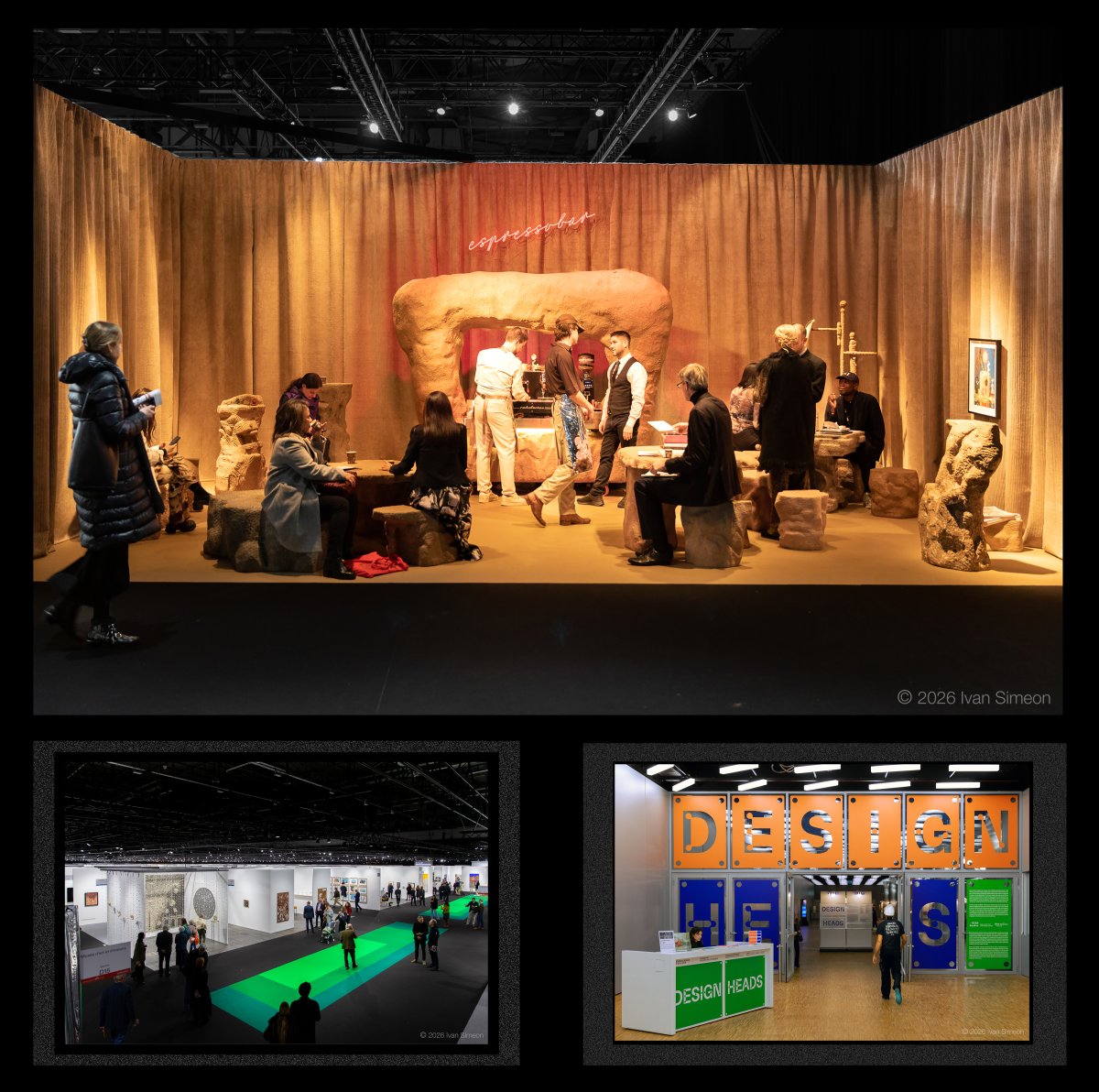
Case Study: Immersive Perspectives and Creative Synergies at Art Genève 2026
Overview
The 2026 edition of Art Genève (picture above) served as a strategic observatory to nurture a prospective reflection on the evolution of visual arts and scenography through the lens of elite design schools and their students. This project captures the dialogue between professional field experience and the academic energy of institutions like HEAD – Genève and ECAL, reinforcing the studio's commitment to the Swiss creative ecosystem.
The Creative Challenge
The primary objective was to analyze emerging trends in Swiss Made creativity and scenography and translate these insights into a refined visual language for high-end environments. A key focus was exploring how narrative mechanics and kinetic objects can redefine the visitor experience within institutional spaces.
Beyond the exhibition, this project acted as a reflection on the future of Swiss design. By engaging with the next generation of creators, I ensure that my approach to complex mandates for high-watchmaking conceptual laboratories remains at the cutting edge of innovation, blending heritage with avant-garde aesthetics.
Process & Collaboration
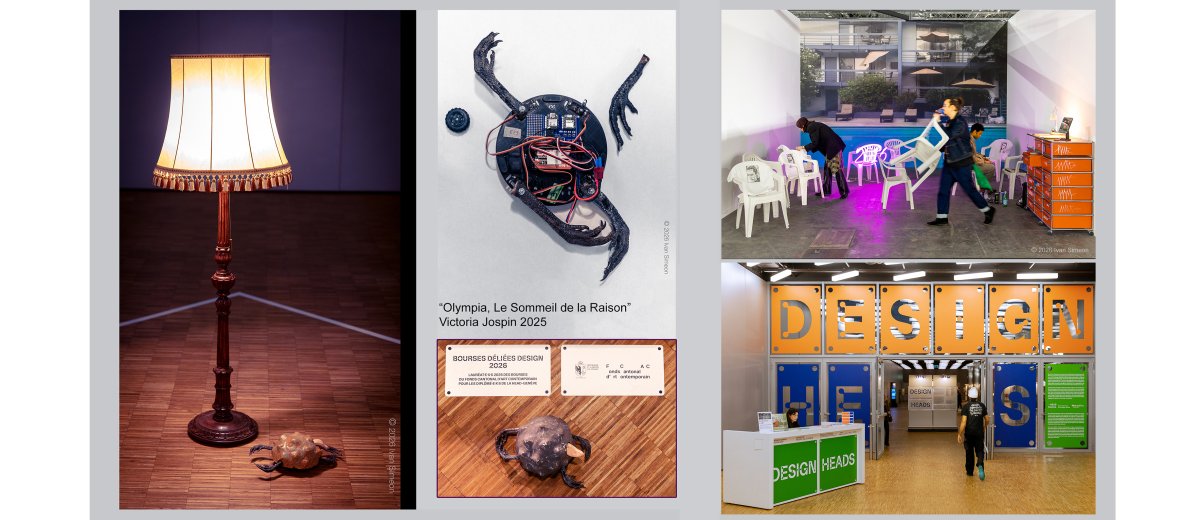
The immersion at Art Genève was highlighted by profound exchanges with the creative guard, notably within the "Design HEADS" section. A pivotal moment was the collaboration and dialogue with Victoria Jospin regarding her project "Olympia: Le Sommeil de la Raison." Throughout our discussions, I explored:
- Mechanical Narratives: Understanding the role of the automaton as a central storytelling device.
- Space & Motion: Analyzing how animated structures influence the surrounding architectural perspective.
- Academic Synergy: Bridging the gap between the visionary research of the HEAD – Geneva and the technical requirements of luxury world-building
Conclusion: Nurturing the Future of Swiss Design
This exploration reinforces my conviction that dialoguing with emerging talent is a priority. The dynamic energy found within Swiss design schools is where tomorrow’s visual codes are forged. By fostering these synergies in Geneva, we ensure that the "Swiss Made" label continues to represent the pinnacle of global excellence and creative leadership.
These prospective reflections allow my studio to approach ongoing mandates for prestigious Houses with a constantly renewed vision, where craftsmanship and innovation meet.
Photographer & Art Director: Ivan Simeon
Featured Designer: Victoria Jospin (HEAD – Genève)
Location: Palexpo, Geneva, Switzerland
Featured Designer: Victoria Jospin (HEAD – Genève)
Location: Palexpo, Geneva, Switzerland
Case Study: Bridging Fashion Design and Visual Narrative in Geneva
Overview
The Creative Challenge
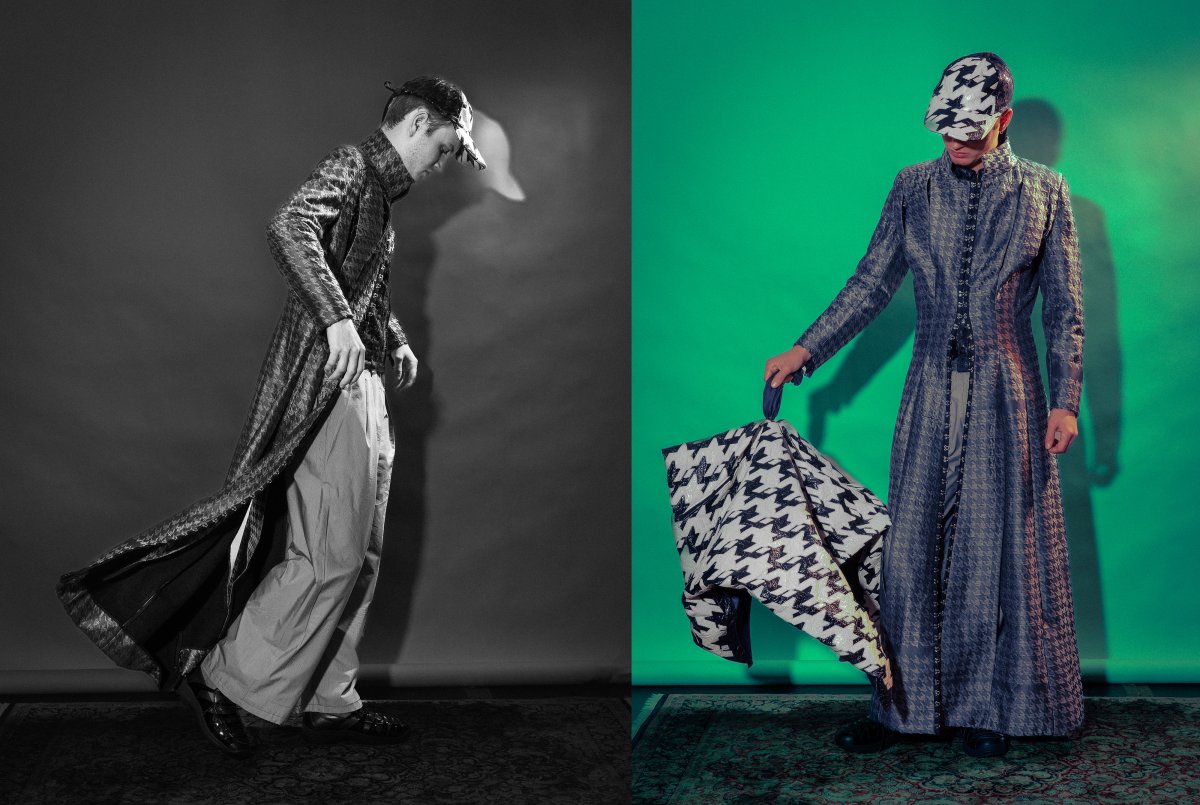
The primary objective was to move beyond conventional fashion photography. We wanted to document the technical expertise of the collection while highlighting the synergy between structured silhouettes and fluid movement.
Beyond the aesthetics, this project served as a reflection on the Swiss creative ecosystem. While Switzerland’s elite design schools (like HEAD) produce world-class talent, the industry faces a significant challenge: retaining these creators. This Case Study demonstrates the immense value of providing local platforms for emerging leaders to express their vision.
Process & Collaboration
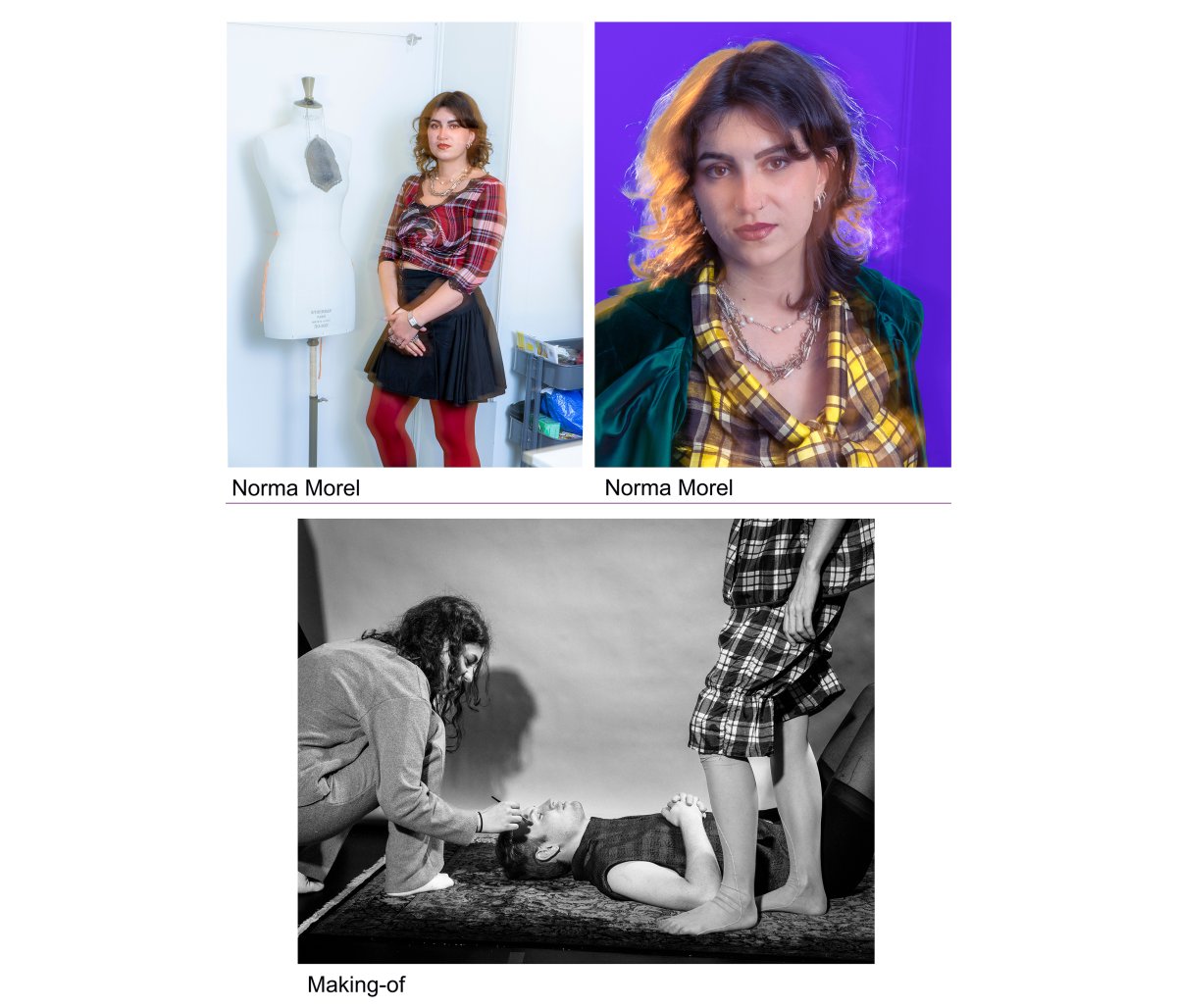
Working with Norma revealed a talent that extends far beyond design. Throughout the production, she demonstrated an exceptional ability to:
- Curate & Lead: Bringing together and managing a diverse team of stylists and models.
- Empower: Creating an environment where every collaborator felt inspired to transcend their usual limits.
- Unify: Bridging the gap between the craftsmanship of jewelry and the texture of textiles.
Conclusion: Nurturing the Future of Swiss Design
By fostering these synergies in Geneva, we ensure that the "Swiss Made" label continues to represent the cutting edge of global innovation.
Photographer & Art Director: Ivan Simeon
Designer: Norma Morel (HEAD – Genève)
Location: Ivan Simeon Photography Studio, Geneva, Switzerland
Designer: Norma Morel (HEAD – Genève)
Location: Ivan Simeon Photography Studio, Geneva, Switzerland
Case Study: Authenticity as a Pillar of Watchmaking Photography
The Context
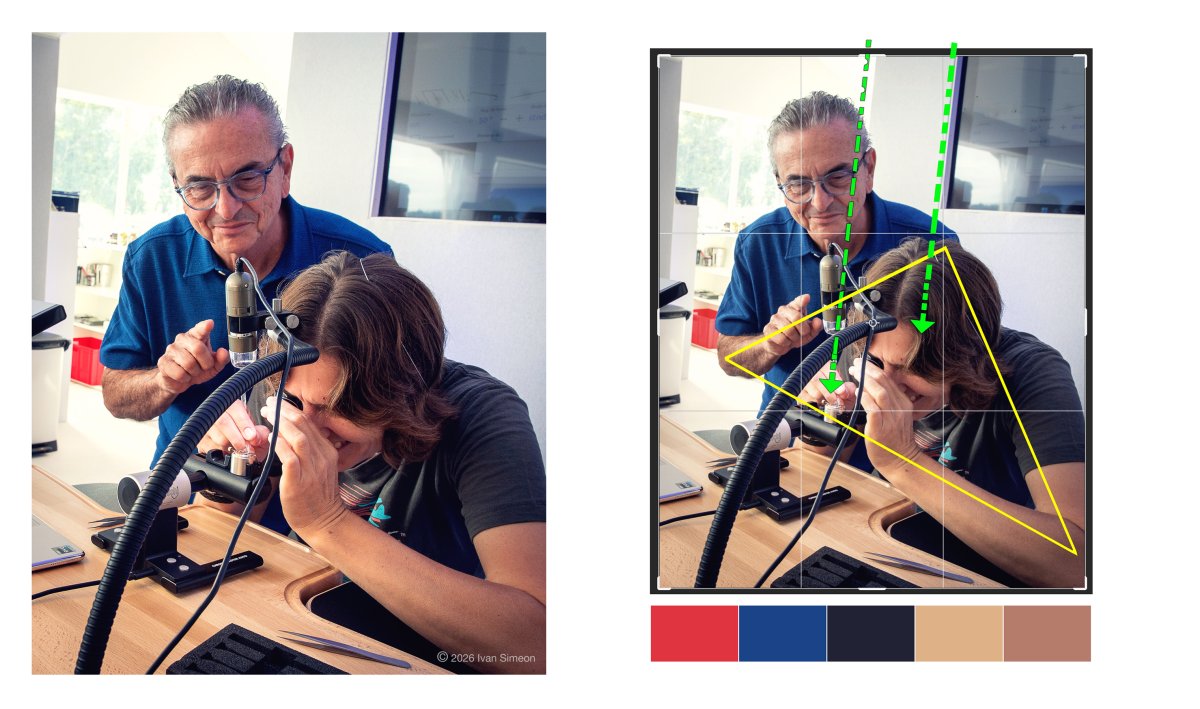
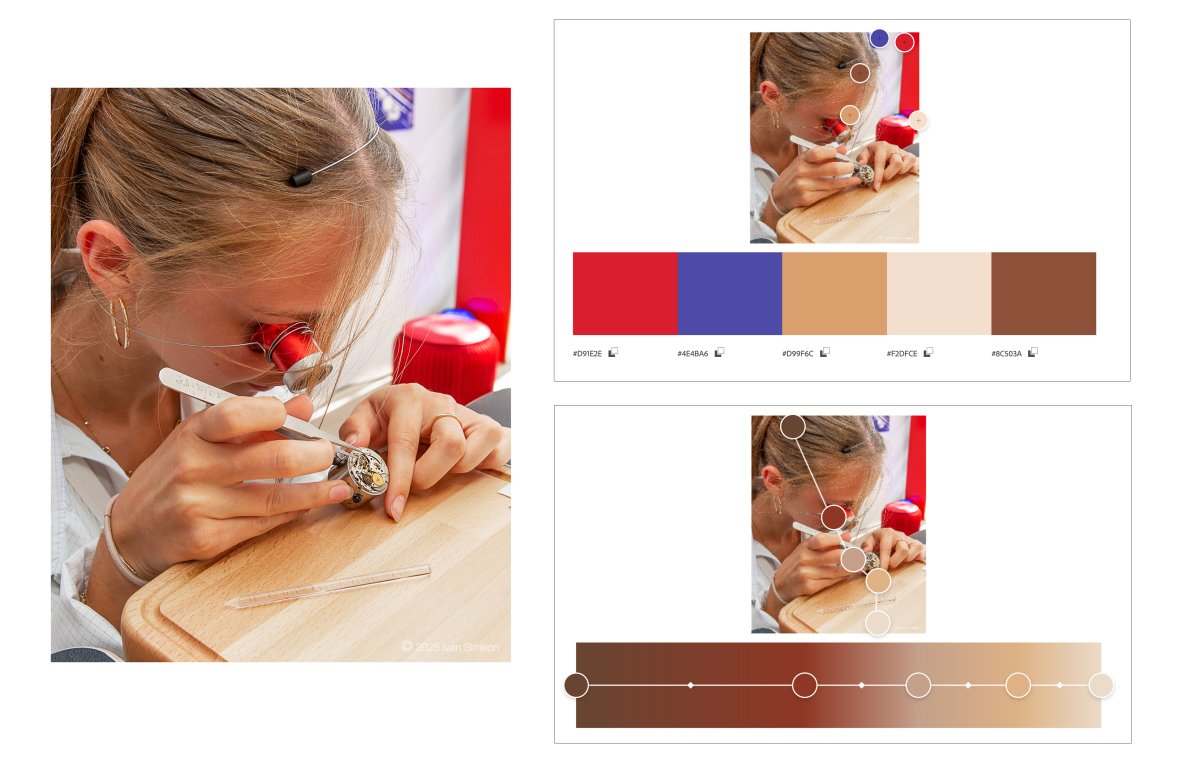
Looking at the possible future of the development of photography in the watch sector, one particular project stands out. Captured during the COSC (Contrôle Officiel Suisse des Chronomètres) competition at Geneva Watch Days, the above photograph resonated deeply within the industry, generating significant engagement and professional feedback.
The Challenge: Beyond the AI Era
In an era saturated with AI-generated visuals and generic stock images, the watchmaking sector is at a crossroads. While creativity is essential for industry recovery, I believe the true solution lies in a powerful tandem: Creativity and Authenticity. The challenge was to create an image that feels uniquely human, capturing the "Swiss Made" soul without falling into commercial clichés.
The Challenge: Beyond the AI Era
In an era saturated with AI-generated visuals and generic stock images, the watchmaking sector is at a crossroads. While creativity is essential for industry recovery, I believe the true solution lies in a powerful tandem: Creativity and Authenticity. The challenge was to create an image that feels uniquely human, capturing the "Swiss Made" soul without falling into commercial clichés.
The Creative Approach
- Light Management: Testing the precise balance between ambient light and flash to maintain the atmosphere of the room while highlighting technical details.
- Strategic Framing: Selecting an angle that provides the necessary context for the viewer while keeping the focus on the human element.
- Color Grading Excellence: Applying a sophisticated color-grading strategy—a core specialty of Ivan Simeon Studio—to ensure aesthetic impact while keeping the final result as natural as possible.
The Process & Execution
The success of this shot lies in the "truth" of the moment, which was only possible through careful orchestration. To visualize the final result and optimize the execution, I conducted several lighting and composition tests with other people beforehand. This allowed me to fine-tune every technical detail before the actual subject stepped in.
The Result
Because of the intense preparation on-site, post-production was kept to a minimum. This resulted in a high-quality press photograph that captures a genuine "story of love" for the craft. In 2025, the uniqueness of an authentic image is no longer just a choice—it is a premium value for the watchmaking and jewelry industry.
Case Study: Photographic Research and Creative Collaboration at HEAD Geneva (Personal Initiative)
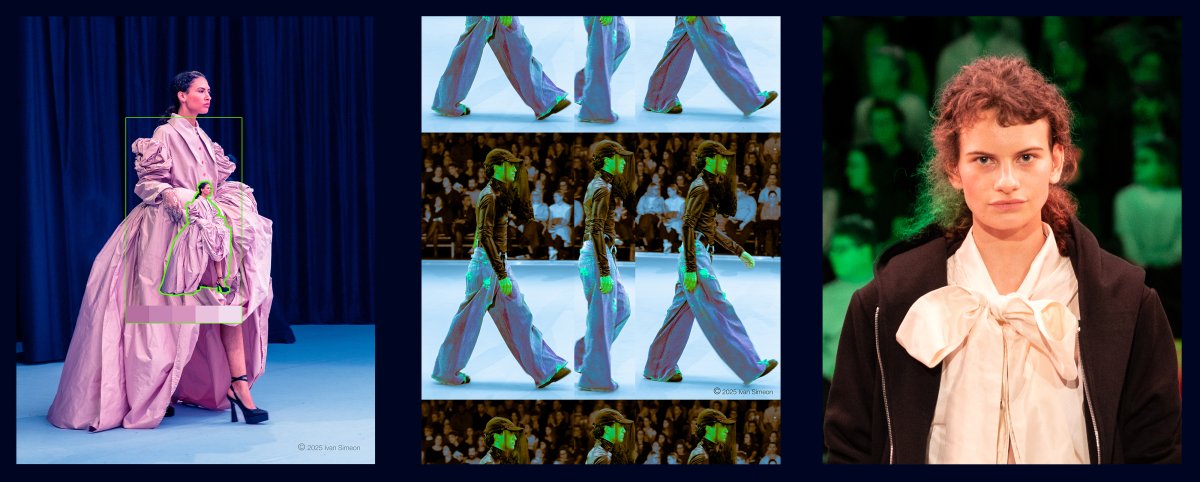
As a Professional Photographer and Art Director based in Switzerland, I frequently get asked: "Why do you photograph the Bachelor's and Master's level fashion creations at the HEAD - Haute École d'art et de design Genève (Geneva University of Art and Design), especially as a personal project?"
The answer lies in a blend of creative passion and strategic professional development. This initiative is a self-driven project, providing a unique opportunity to capture innovative work and push the boundaries of my photographic research.
The Objective: Curating Creative Inspiration
I do not photograph all collections. Instead, I capture the designs that resonate with me the most from a creative standpoint—whether it’s the innovative use of colours or the intricate elaboration of the students’ work. This selective approach allows me to focus my energy on projects that truly inspire me.
My Approach: Experimentation and B2B Application
This project serves as a crucial opportunity for continuous professional development. The dynamic environment of the live fashion show challenges my technical skills, while the artistic freedom allows for valuable experimentation.
Crucially, I am in contact with the students, allowing me to exchange information and opinions with them. This dialogue is a vital part of the process, challenging my own perspectives and helping me discover new ideas. We discuss not only their creative work, but also their research and general culture, making the interaction incredibly enriching for both sides.
Manual Post-Production as R&D:
The images within this case study were captured during the event and have undergone extensive, manual post-production. I specifically test new techniques and ideas, particularly associations of colors and textures. This experimentation phase is a vital part of my workflow:
- Testing New Ideas: I use these projects to explore innovative photographic techniques and aesthetics.
- Audience Testing: Publishing these results allows me to gauge target audience reactions and refine my approach.
- Future B2B Integration: This feedback process helps me bring new, mature techniques that can later be incorporated into future corporate mandates and commercial projects, ensuring my services remain contemporary and cutting-edge.
The outcome of this ongoing initiative is a high-quality visual archive that reflects the hard work of specific graduates.
Significantly, this allows me to experiment with innovative concepts in collaboration with this emerging generation of creatives. This is designed as a mutually beneficial collaboration: the students provide me with valuable fresh perspectives, and in return, I strive to offer them high-quality visual assets, professional insight from my experience, and access to my network of contacts.
Case Study: From Independent Makers to Major Swiss Brands – A Different Photographic Approach
What is the difference between taking photographs for an independent watchmaker and for a brand belonging to a group or for one of the major Swiss watch brands?
The difference is significant, primarily concerning the approach to themes such as authenticity and expertise. Working with independents brings an additional layer of responsibility. Often, there are no predefined standards, extensive market research, or established marketing tools to draw upon; the creative direction must be built from scratch.
The Human Factor in the Creative Process
When working on assignments for independent watchmakers, people are at the heart of the creative process.
This means a professional photographer needs to conduct a great deal of preliminary research and pay close attention to subtleties. It also requires building a different kind of working relationship with the talent and their team compared to that required for a large corporation or an industry leader. The collaboration is closer, more personal.
When Talents Join Forces: A Case in Point
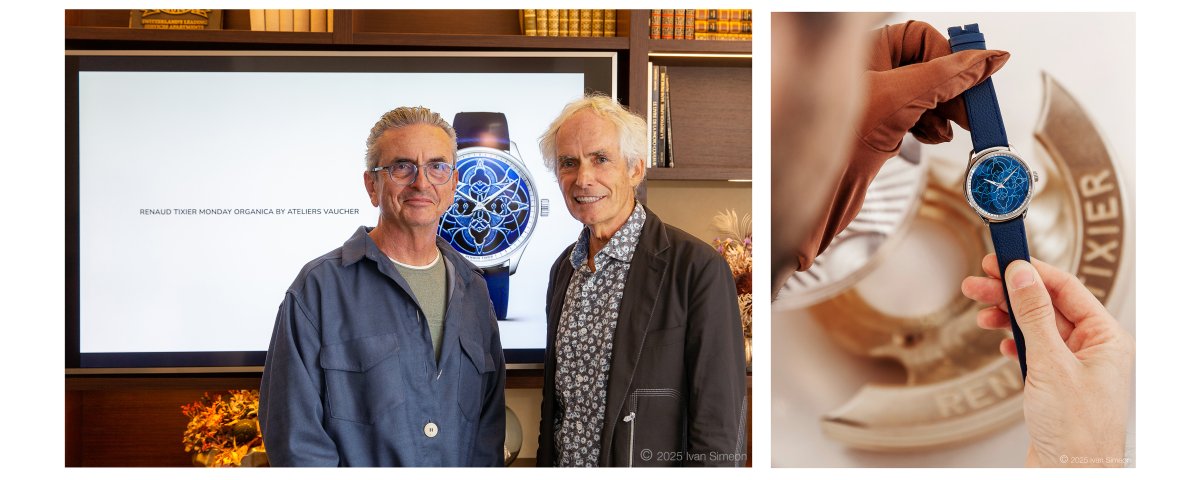
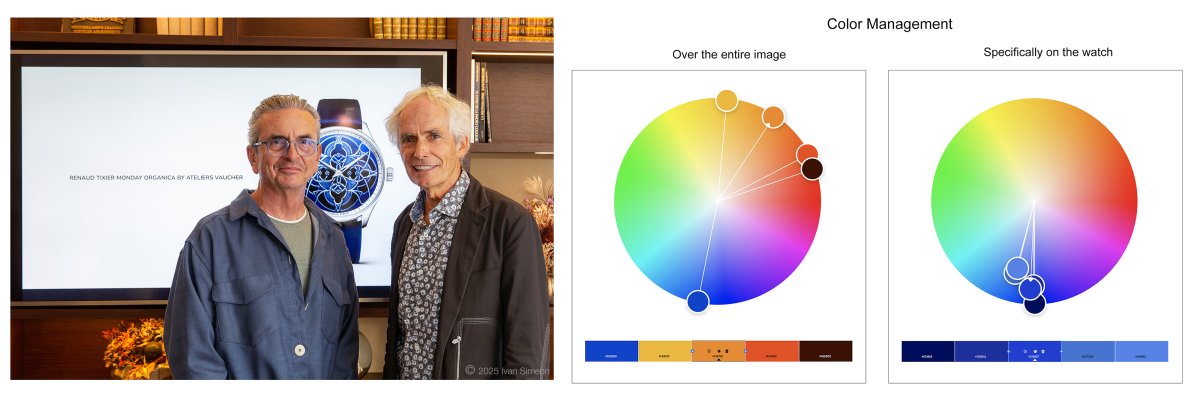
Where it gets truly interesting is when several independent talents join forces to create a timepiece without compromise. An example? My assignment for Maison Renaud Tixier and the Monday Organica watch by Olivier Vaucher. This project combined the technical innovation worthy of a renowned master watchmaker such as Dominique Renaud with the unique creative signature of Ateliers Olivier Vaucher.
Precision Work: The Formula 1 Analogy
It is precision work, which can perhaps be compared to driving a Formula 1 car: the slightest detail can cause you to veer off the track and lead to the race being neutralized, or even a red flag. The photographer cannot afford to make any creative or technical mistakes.
This demands extreme care with the photography to avoid relying heavily on post-production tools such as Photoshop. The naturalness and authenticity of the images must highlight the watchmaker's unique approach and the creative synergies proposed by Olivier Vaucher, centered on cutting-edge craftsmanship applied to watchmaking.
Results & Impact
Ultimately, these mandates are far more than just commercial assignments; they are opportunities for deep collaboration that enrich all involved parties.
The outcome is an authentic visual narrative that perfectly mirrors the craftsmanship of the independent watchmaker. This process allows me, the photographer, to contribute my technical expertise and creative vision while deepening my understanding of the industry's cutting edge—a truly mutually beneficial partnership that goes beyond a standard client-vendor relationship.
What about the colour work on this specific mandate?
As the watch face, which evokes the architecture of the movement and is therefore in a way a portrait of Dominique Renaud, is the dominant subject of the image, I worked on the colours in two phases:
1) a study of the colours of the image as a whole
2) a study of the colours of the watch face, i.e. the subtleties of the different shades of blue and their reflections.
This was a real challenge due to the complexity of the mixed techniques used by Olivier Vaucher. These included multi-level hand engraving and translucent blue Grand Feu enamel, which creates a kaleidoscopic effect. Summarising more than 112 hours of work on the dial alone in a single image.
| MENU | |||
|---|---|---|---|
| HOME | CORPORATE | ARCHITECTURE | |
| MOBILITY | PUBLICATIONS | PERSONAL WORK | |
| BIOGRAPHY | CONTACT |